
There are two city parks in the town of Hamilton, MT that I really enjoyed: River Park and Hieronymus Park. Moose are common in the city parks. There are plenty of signs in River Park warning users of Moose in the area. While I did see moose, I was fixated on the woodpeckers.
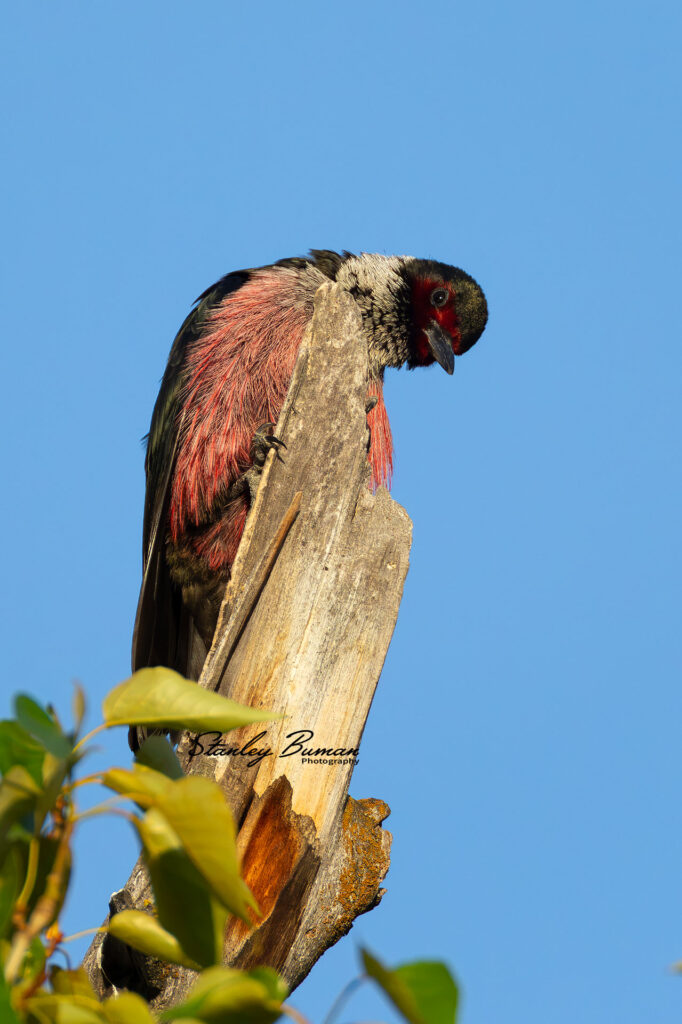
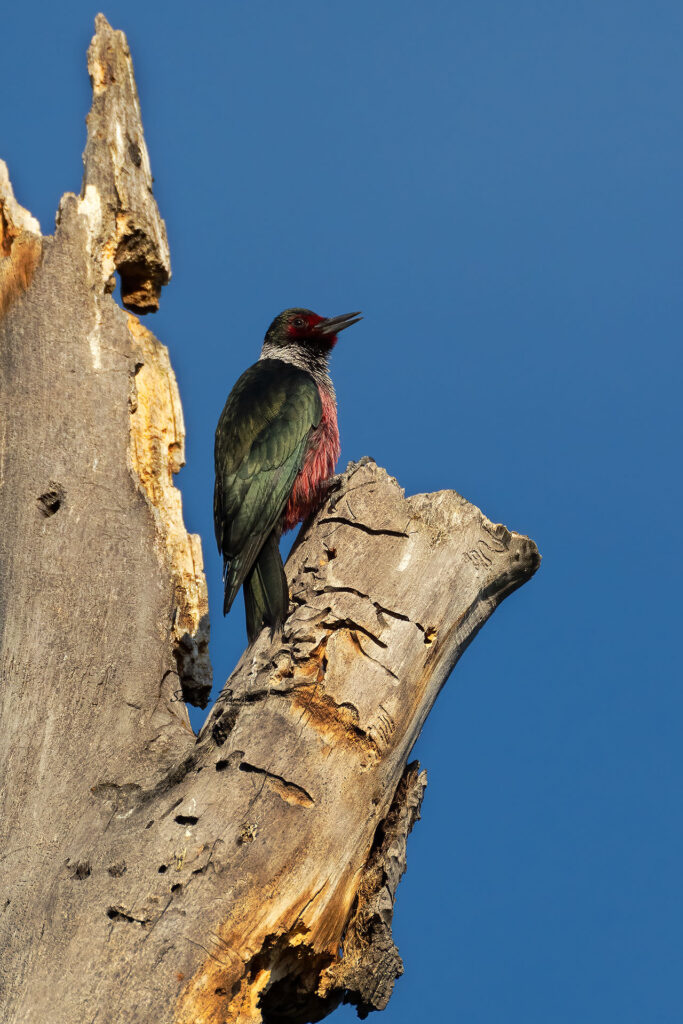
I was very excited to see a Lewis’s Woodpecker. The first time I saw one was in 1984 when my brother and I were on our way to Glacier National Park. But I could not identify it. It was perched more like a Robin than a Woodpecker. Roughly 25 years later, I was watching a nature show which featured the Lewis’s Woodpecker. I finally made the connection and was able to put a name to the bird I had seen so many years before.
My next sighting was in 2023, in Southwest Colorado while hiking with my cousin. The woodpecker stayed far away. I guess it was camera-shy.
Lewis’s Woodpeckers are residents in both parks in Hamilton. Photographing them was a bit challenging, as they perched in the upper canopy of tall trees.
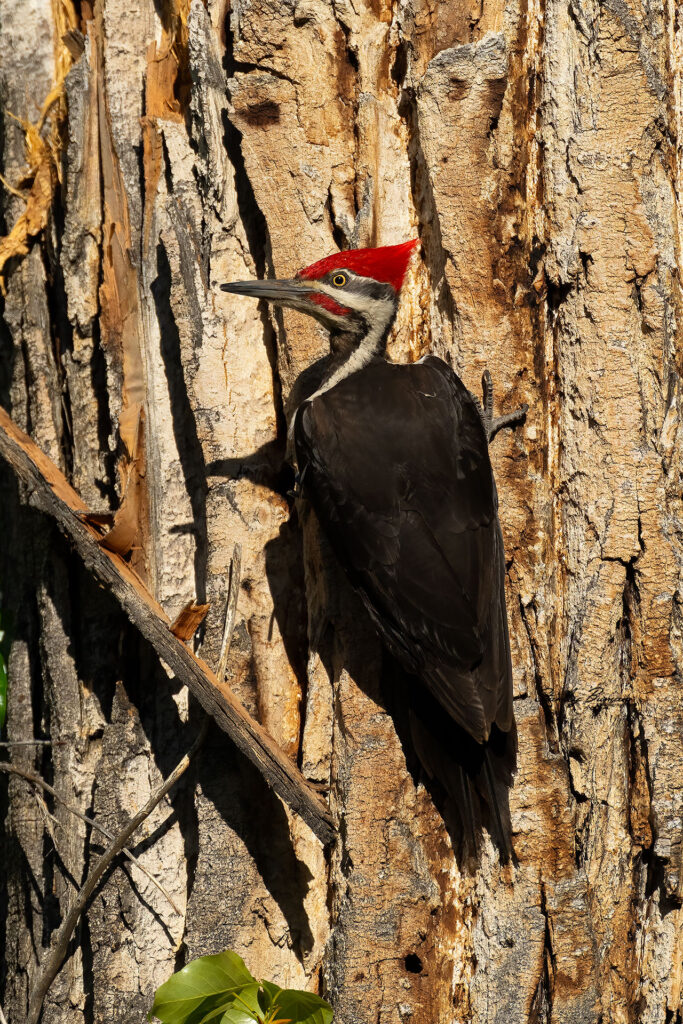
When you see a Pileated Woodpecker, you may be reminded of Woody Woodpecker, the cartoon character.
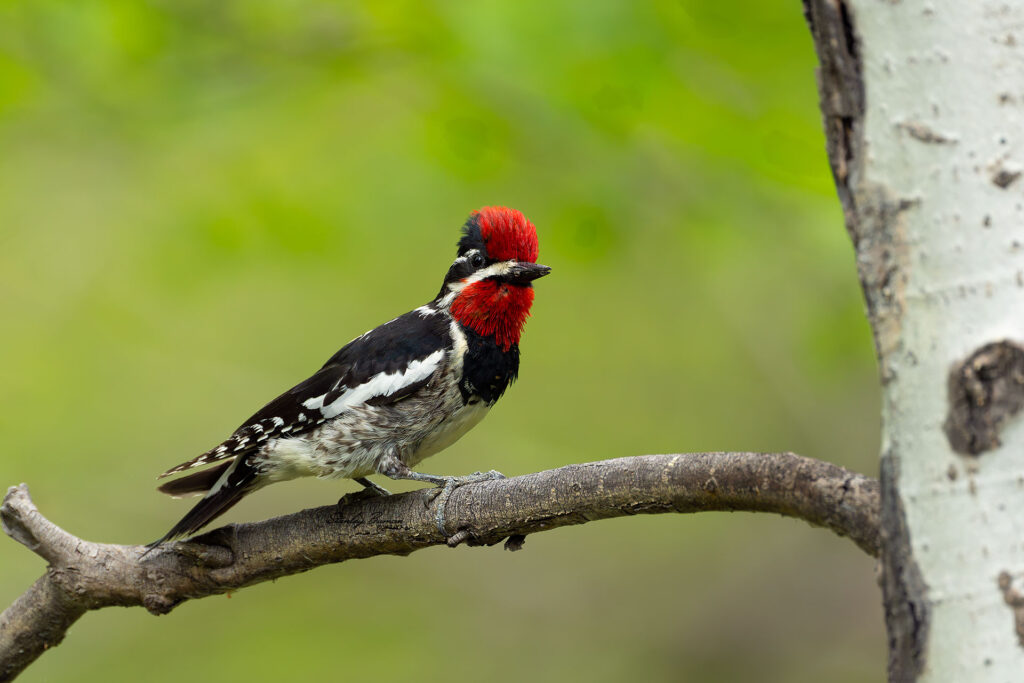
The Red-naped Sapsucker was one of the first species of woodpeckers that I saw in River Park. It was one of the main reasons why I kept going back to this park. However, it was numerous weeks later before I was able to get pictures of them. I love the striking coloration.
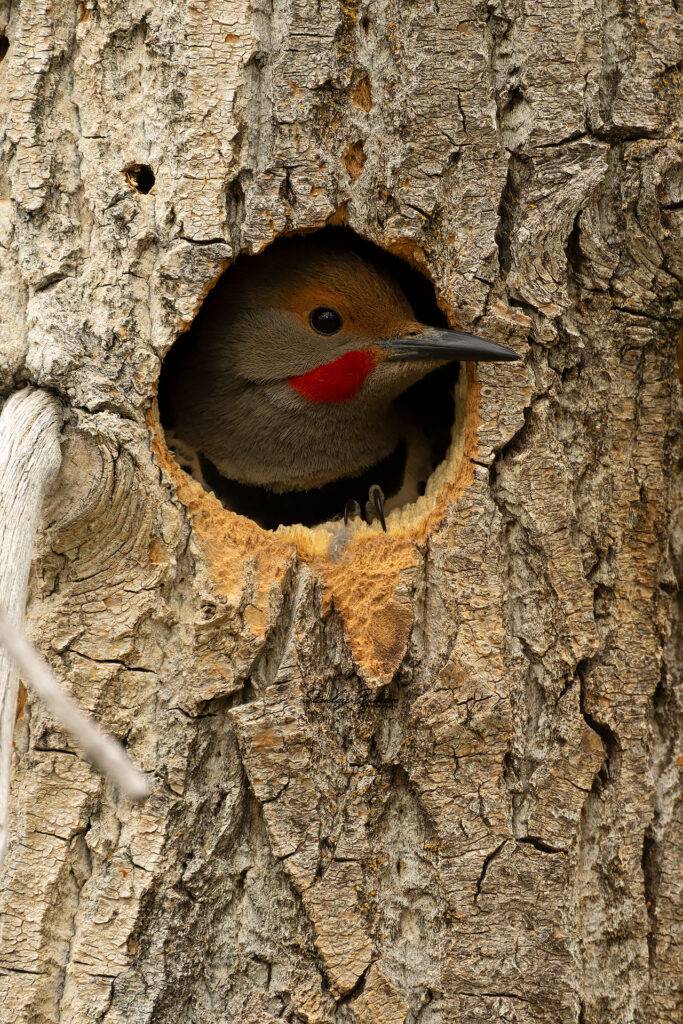
Northern Flickers are one of the most common and wide-spread members of the woodpecker family. I was happy to find a nesting cavity.
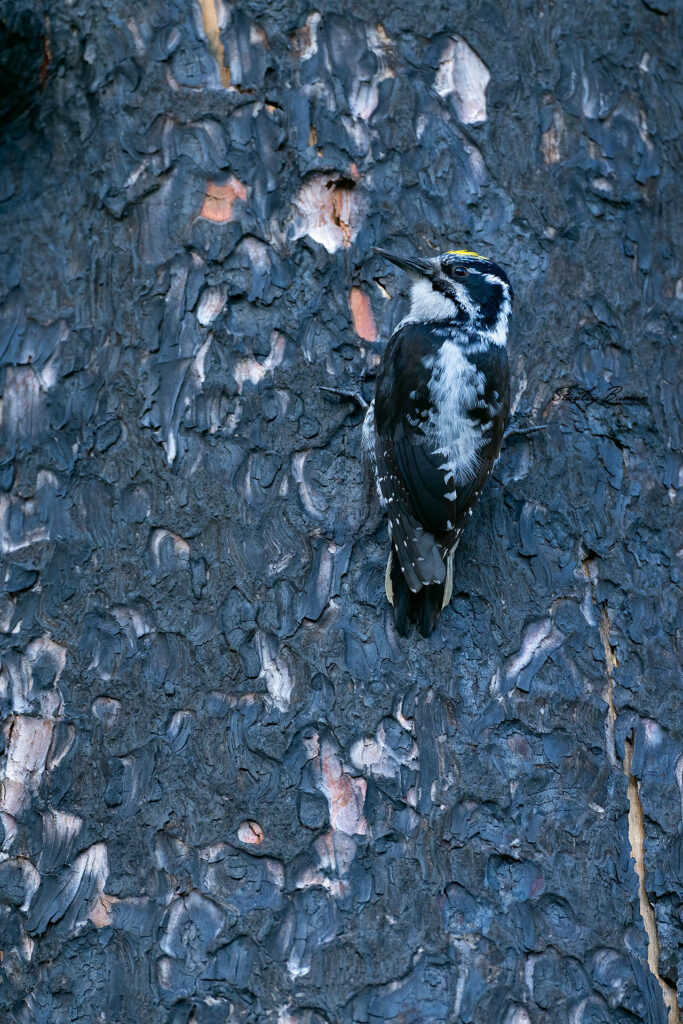
I rarely get to see the American Three-toed Woodpecker. I found several on a day-trip across the valley to the Sapphire Mountain range, east of Hamilton. I wandered into a forest where the Daly Creek wildfire burned in 2024. Knowing that this woodpecker species prefers foraging in burned timber, I spent some time looking for them and was quickly rewarded.
While none of these woodpecker species were new to my life-list, I thoroughly enjoyed getting reacquainted with them and photographing them in Western Montana. And there were so many other species of birds to enjoy…
Stan, not only are you a phenomenal artist, using your camera, to capture the images, with the colors, the lighting, and the placement of the subject, with the background arranged, in such a manner, that the viewer, is compelled to ‘stare’ in order to fully experience what you offer, for, in addition to the viewing pleasure, you share well researched wording, written with a polished-flair—hence it is always a tranquillity!!!
Thank you Pam. I am grateful that I can do what I am doing.
I love the woodpeckers, too. Thank you, Stan, for such a brilliant series of photos. And your narration is always top notch.
Thank you Carol. I have been photographing the Red-headed Woodpecker since returning to Iowa.
Wow! Your pictures are so good. So clear. Great job! Always interesting to read about the birds too. Thanks for sharing!
Thanks Diane. I love what I do.
Love all your pictures and researched information as well.
The pleated woodpecker is a resident of Bella Vista AR as well.
Yes. You are fortunate that they reside in your area. I wish they were common in West Central Iowa. I have seen two in the last 5 years in Sac County.
The Pileated Woodpecker looks so prehistoric! Jurassic Park-ish! Wonderful photos all around!
I always enjoy seeing Pileated Woodpeckers.