
What would entice me to go to the Prairie Pothole region in central North Dakota when there are wetland potholes near my home in Iowa? For me, it was an easy answer. I wanted to photograph Western Grebes. I seldom get to see them in Iowa. Their courtship ritual is quite fascinating. And, I was on my way to Montana (more on this in a later post).
The Prairie Pothole region extends from Alberta, Canada to central Iowa and is referred to as a duck factory. Many other species of wildlife use these wetlands.
Six species of grebes are commonly found in North America. Most non-birders glancing over a wetland would think they are “just another duck”. Grebes have legs that are placed very far back on their bodies, making them very clumsy walkers but powerful swimmers. Also, they have separate lobed toes, unlike the webbed feet of ducks.
After doing some on-line research, I homed in on a few locations where I was likely to observe Western Grebes. I also watched the extended forecast for the region to make sure the weather would be acceptable (low wind speeds) for float-blind photography. And I wanted to be in western Montana by May 1.
Upon arrival in ND, I found wind speeds to be a little higher than predicted, even in the early mornings and evenings. I used my float-blind only one morning out of a total of two mornings and two evenings. More time was spent scouting out locations than photographing birds. I was not familiar with the area and needed to check out public access, easy access to open water, habitat, and bird use of various wetlands.
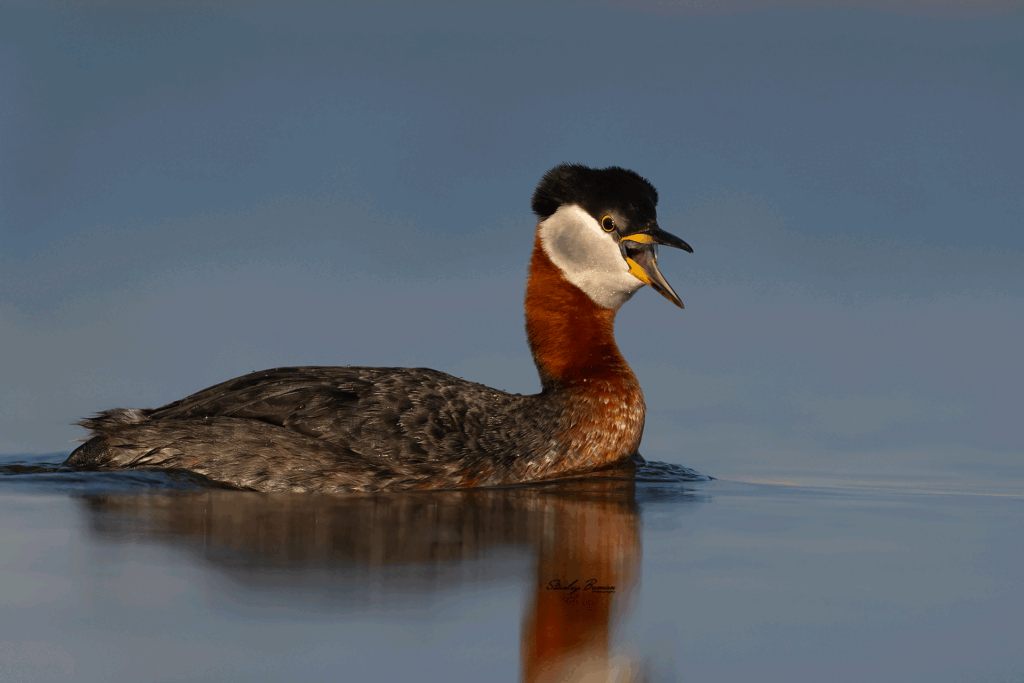
I pretty much struck out on photographing the Western Grebes due to the wind, but was able to photograph other grebe species, ducks, and an American Bittern. And the scouting will be helpful in knowing where to return on my next trip to the region…maybe April of 2027. Still, it was worth the adventure.
The first evening, I located a pothole where I could photograph grebes. The next morning, I was in my float-blind, hugging the shoreline, waiting for the early morning light. For float-blind work, I like to keep my feet planted firmly on the bottom instead of drifting helplessly in deeper water. I didn’t know the water depths between the Western Grebes and me and didn’t want to waste the golden light of early morning trying to find out. So, I played it safe and photographed other grebe species.
The Red-necked Grebes and Eared Grebes were hanging out near me. I focused my time, attention, and camera on them. I seldom see these species in Iowa either.
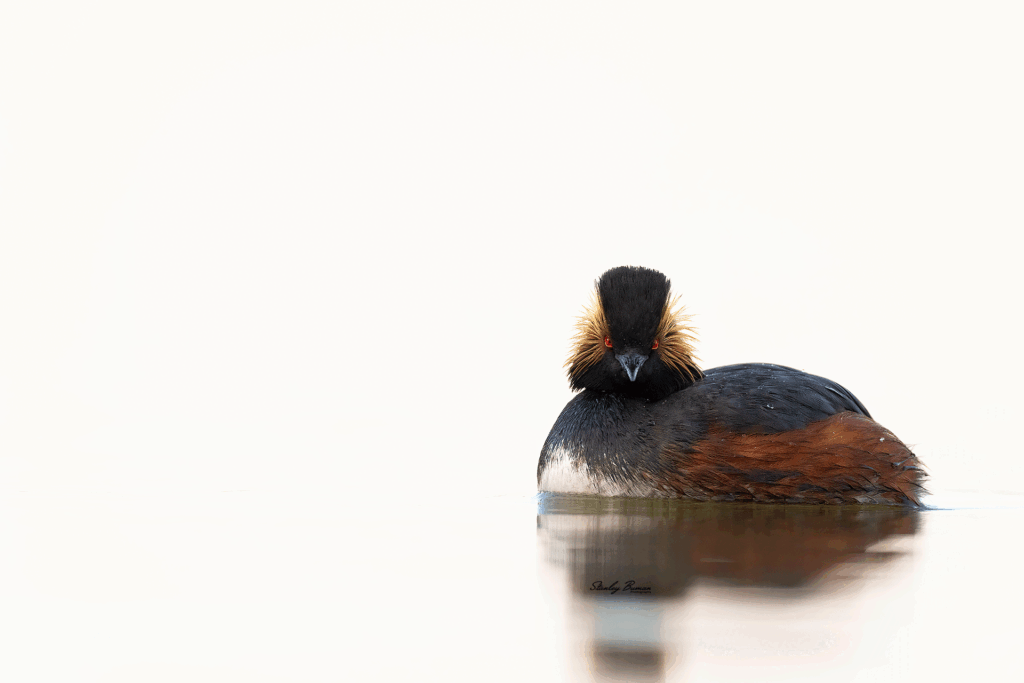
The Eared Grebe is considerably more colorful in its Spring breeding plumage than during the winter, when it is mostly gray and white.
While photographing grebes, I heard an American Bittern vocalizing up the shoreline. I slowly made my way in that direction and was able to photograph it amongst the cattails.
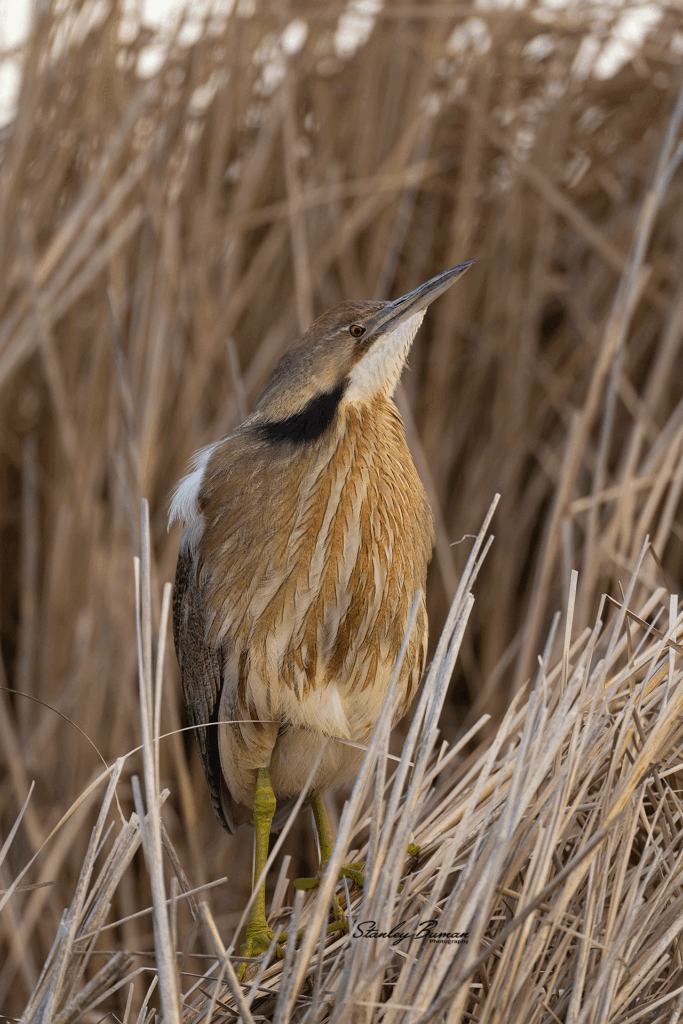
By this time, the light was getting harsh. I gave up on photography and explored the wetland via my floating blind. I was happy to find out that my feet could touch bottom in all of the areas where I wandered. I found out that I could easily navigate out to the Western Grebes. I was hoping to do this that evening or the next morning but the wind did not subside. Yet, this information will be valuable, if I return in the future.
Oh, so many places to go and not enough days in my life…
I love the bittern..thank you. Smart choice about checking depth of the water before you float off to who knows where. I’m going to listen to the bittern’s call when I get you. You’re a young pup. I believe you have a good many days left. Thanks again Stan.
Thanks Sue. I don’t have much control of my floatblind when my feet are dangling in deep water.
I hung on every word of your narrative. And your photos! Spectacular. Thanks so much for posting.
Thanks Carol. I hope we see each other again soon.
Interesting
Thank you.
Thank you. Fascinating info and great photos!
Thank you. I still hope to get to Oakland this summer to see you.
Great images as always Mr. Stan.
Thank you.
Wonderful adventure Stan. I love that you share your experiences with us. The Prairie potholes are becoming a photo destination as I hear more people are making the trip there. If you want Western Grebes come down to San Diego. I’ve got a very popular spot for you too explore. We have them nesting at a local lake about 10 minutes from me. All the best In Montana.
Some day, I may take you up on your offer. There are a lot of great places in the San Diego area to phohtograph birds.