
Of all the native mammals of Wyoming, it was a rodent that likely played the biggest role in shaping the state.
Beavers are the only mammal (besides humans) to engineer their own ecosystem. They do this by felling logs and damming up water, turning dry valleys and small streams into complex wetlands. This not only magnifies habitat for the Beaver but also for many other wildlife species.
In the early 1800’s, Beaver pelts became a highly sought-after commodity due to the global demand for beaver-felt hats. There was an onslaught of non-indigenous people into the state. These trappers/explorers traversed the landscape in search of Beaver pelts. Their knowledge of trails, river valleys, and mountain passes led to the establishment of trade routes. Years later, the Pioneers would use these same routes as parts of the Oregon/California/Mormon Trails.
Who would have guessed that a rodent would play such a critical role in shaping a state.
During an early-morning walk near the Green River, I caught a glimpse of a mammal swimming in the river. I soon discerned that it was a Beaver and noticed it had a lodge along the river bank. I spent multiple early mornings lying on a tarp in the mud along the river’s edge, trying to photograph Beavers.
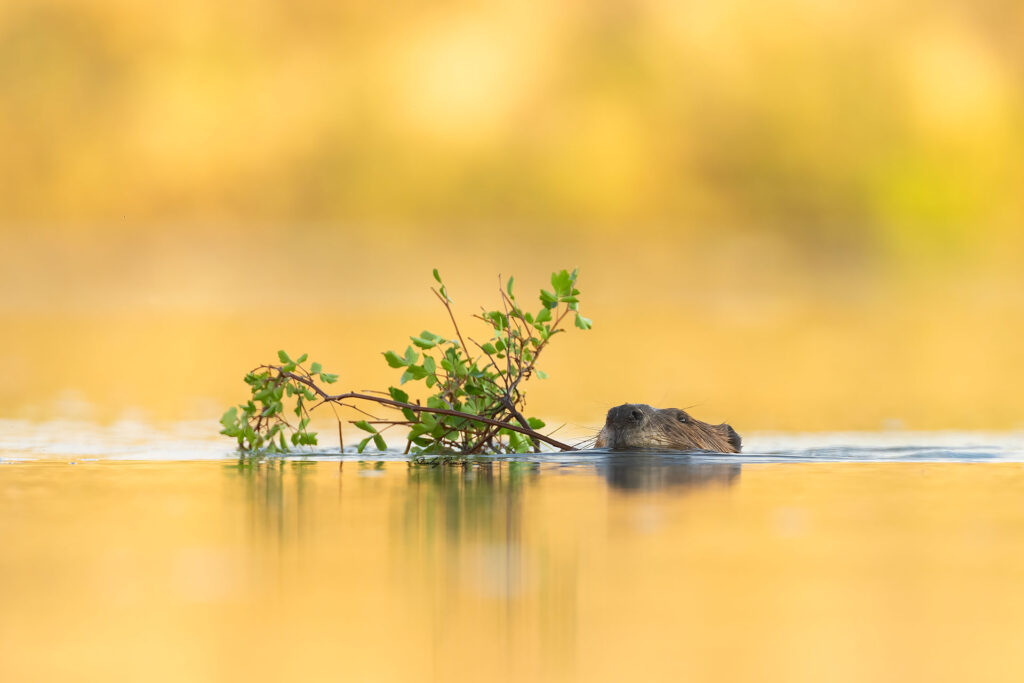
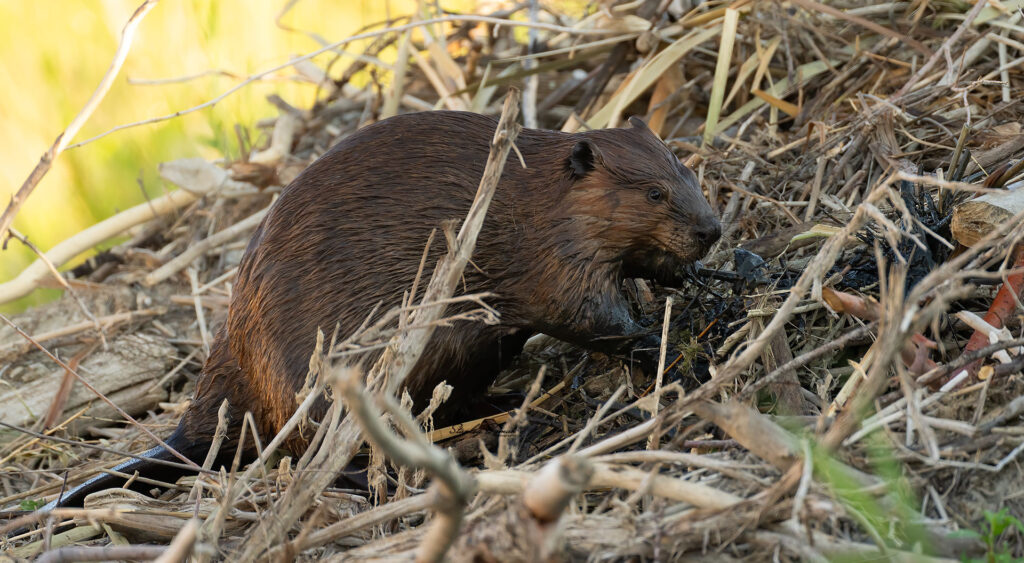
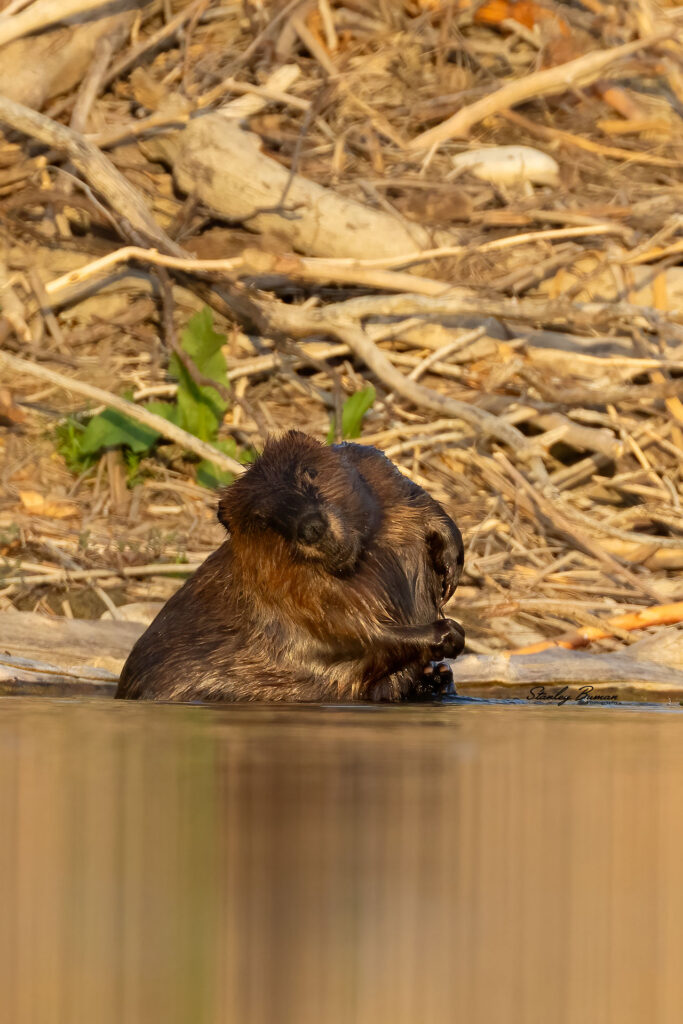
I thoroughly enjoyed watching and photographing the Beavers. But even more exciting to me was seeing a young family of very cute Common Mergansers. This was an unexpected bonus.
The Common Merganser hen raises the chicks by herself. The chicks begin feeding themselves within a couple of days of hatching. Catching a ride on their mother’s back is critical to survival. It provides warmth from the cold river water, helps save energy while navigating the fast-moving river currents, and provides protection from fish, turtles, and birds of prey.
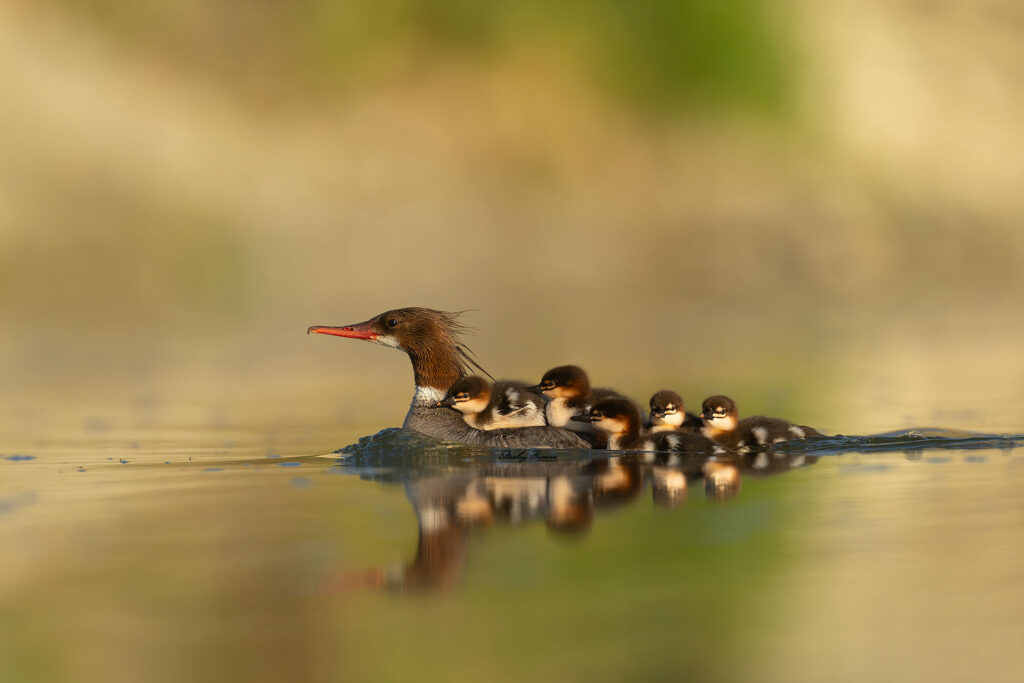
Experiencing the young brood of merganser chicks was probably the highlight of my trip. They are so dang cute and fun to watch.
Yet, there was so much more to enjoy in Wyoming.